Audience intelligence has always promised more than it’s delivered. Black boxes. Stale data. Segments built on a single signal, by systems with no real history behind them.
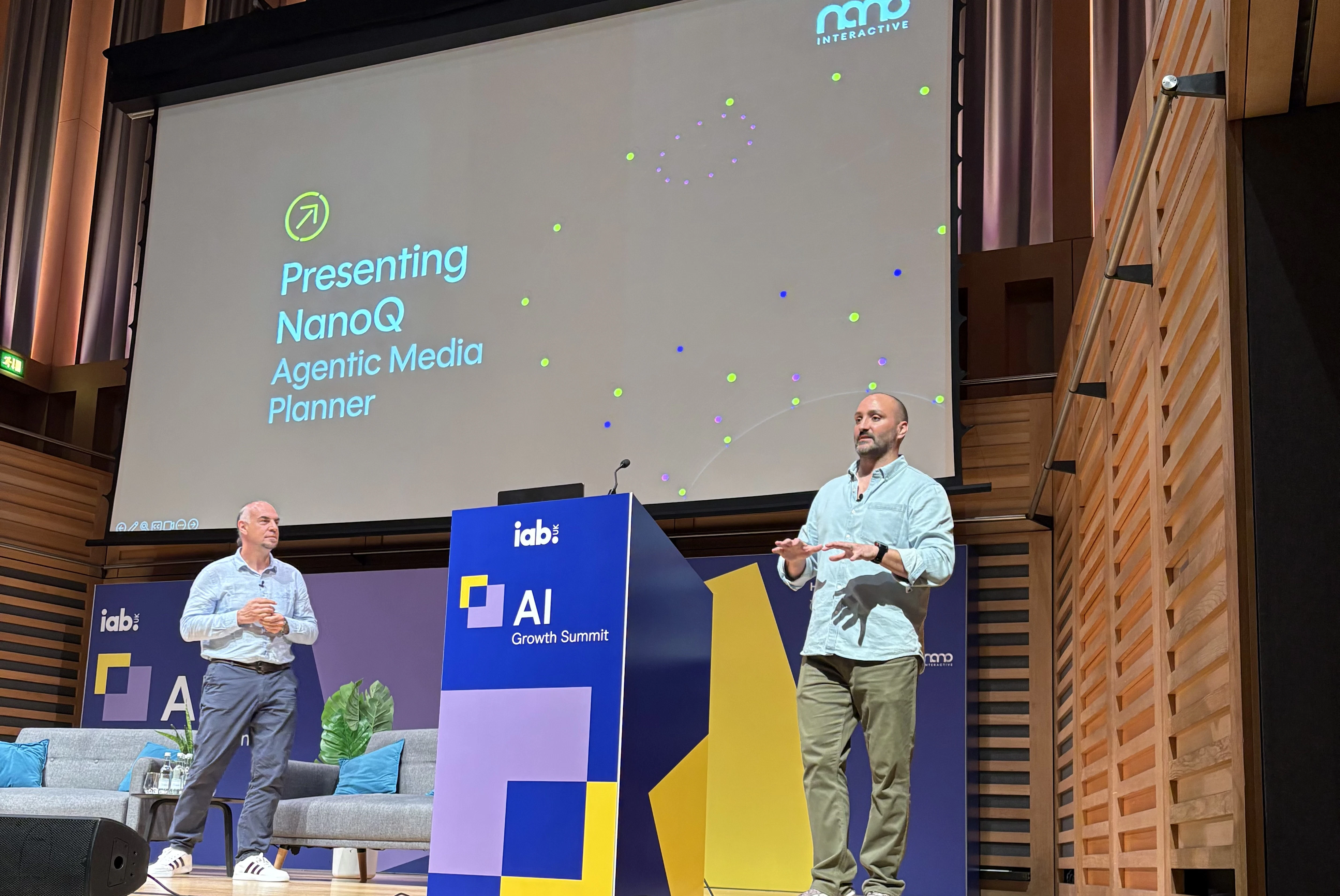
Nano has been aware of this challenge - and has been doing something different - for over a decade. At the recent IAB UK AI Growth Summit our CRO Niall Moody and CTO Rade Popović took the stage to walk through NanoQ, our brand-new Agentic Media Planner.
Together, they explored the work behind the live platform, based on five key pillars: control, audience discovery, global scale, CTV intent, and outcomes.
Why intent is about to become the language of agentic media
Intent is rooted in observable, outcome-orientated behaviour that spans the entire customer journey, far beyond the initial purchase stage. It emerges from combinations of signals, because one indicator is rarely enough on its own.
The challenge in advertising has always been how to read billions of those signals across hundreds of markets, cultures and languages and turn them into something usable. Agentic AI raises the stakes by expanding this challenge. Autonomous planning and buying systems will need to interpret human intent directly - and so intent becomes the native language of agentic media.
For over ten years, we've been building that intelligence layer to interpret these signals while maintaining data integrity. LIIFT, our proprietary intelligence engine, puts planners in the driver's seat and takes custom audience builds from days to minutes.
So let’s take a look at the five pillars of intent in more detail.
Intent is rooted in observable, outcome-orientated behaviour
— Niall Moody, Nano Interactive
1. Control: the first thing media planners give up
When it comes to agentic AI, the industry is largely optimistic right now, but also a little cautious. Much of what’s being rushed to market sits on thin data and untested models, and the first thing planners tend to give up is visibility into what is guiding outputs.
NanoQ takes the opposite approach. Every decision is logged and can be overridden. Brand suitability has been core to the platform from day one - planners set the guardrails on where your brand appears and where it doesn’t, and the tool enforces them at scale. Privacy is baked into the platform by design; data is not shared or used for training, and every agent action is auditable.

2. Audience discovery - finding new segments with precision
The tool reads a brief and a brand URL against our live intent graph and returns targeting strategies built from real-time signals. Some match what a planner had in mind at the outset. Others surface angles a planner wouldn’t have considered, the affinity clusters and passion audiences that form around global events in ways that don’t always have a label.
Take a premium airline aiming to conquer competitor audiences during a World Cup year, without the sponsor budget. The intent graph picks up audience behaviour signals as they emerge, so the airline can activate new audiences. That’s where the real marketing opportunity lives.
There is a vast and persistent data gap between what the CTV viewer experiences, and the advertising transaction that follows.
— Niall Moody, Nano Interactive
3. Global scale, local intelligence
We operate across more than 100 markets. Multilingual vectorisation feeds the NanoQ platform semantic understanding, in any language. This means that campaigns land with the same precision in São Paulo as in Southampton, which is crucial for any brand running coordinated activity across regions.

4. CTV, with context
CTV has been dark for a decade. There is a vast and persistent data gap between what the viewer experiences, and the advertising transaction that follows.
With this inconsistent metadata and patchy genre fields, most CTV buying defaults to broad demos or app-level categories such as “sports streaming” rather than verified sports programming. Show-level placement matters for campaign success, yet many media planners struggle to move linear budgets to CTV because there is limited programme data available.
Nano has addressed this by porting the full intent stack into CTV, applying the same placement-level contextual analysis we run across display, and resolving signals across every inventory source. This solves the persistent data gap within existing CTV infrastructure, delivering buying built on actual intelligence signals.
5. Outcomes and architecture
Three agents work in parallel to form Nano's agent architecture. Two read the inputs - the campaign brief and the brand's landing page. A third coordinates the output, deciding on the targeting tactics, called Intent Topics. The framework interprets what the campaign actually needs, rather than asking the planner to pick category boxes.
The output is a custom segment built directly from the brief, plus ready-to-use options: a web version surfacing pre-built segments already live with partners, and a CTV version showing the programmes where the ad could appear.
Activation runs in the same workflow. Adjustments go through a built-in chat, and a single click sends the segment into the planner's existing DSP as a Deal ID or data segment.
The intelligence layer underneath collects 5 billion signals a day across 7 million URLs, matched at the sentence level through vector analysis, with machine-learning optimisation models in the bidstream.
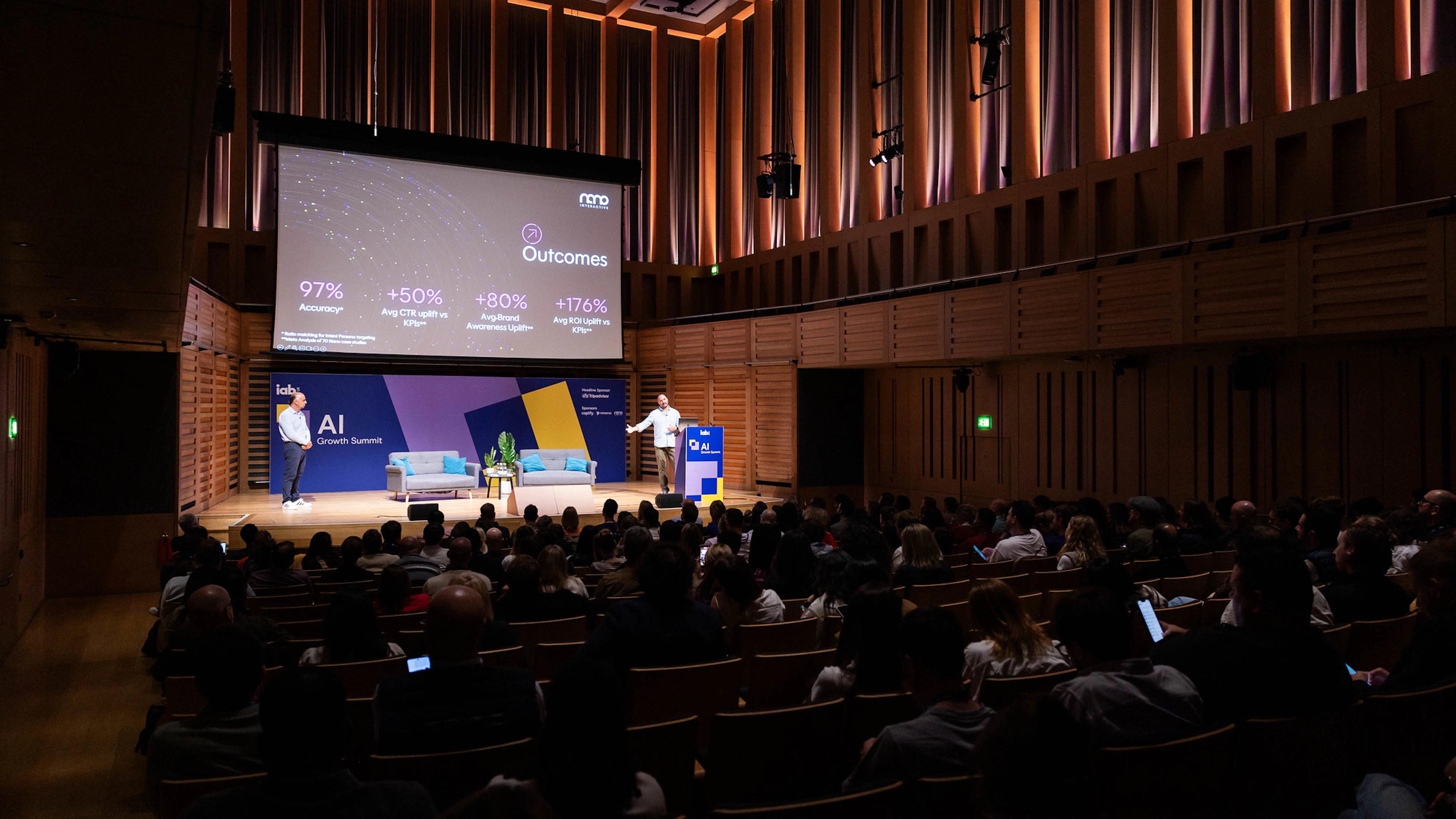
Analysis of 70 recent campaigns running through the platform delivered:
- 97% targeting accuracy
- 50% click-through rate (CTR) uplift versus key performance indicator (KPI)
- 80% lift in brand awareness
- 176% return on investment (ROI) uplift
Those results come from a decade of optimisation work, refined until every part of the loop earns its place.
AI is moving from pitch decks to advertising infrastructure, and the integrity of outcomes becomes the differentiator.
The recent demo brought home that intent isn't just NanoQ's input, but what the whole system runs on. As an industry, we’re finally starting to move beyond the black boxes and stale data that audience intelligence has too often delivered, building a strong foundation for agentic AI.
Speak to our team to see NanoQ in action.